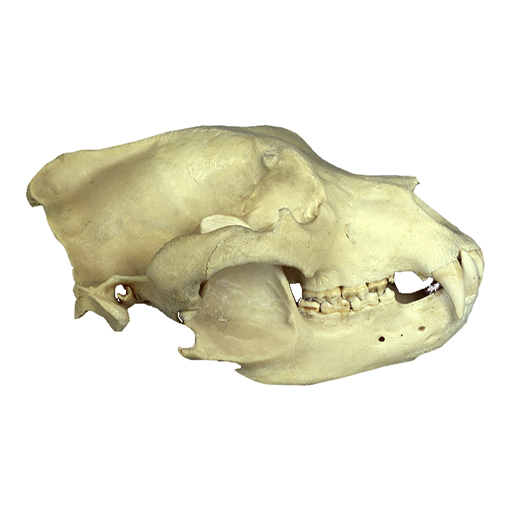
The body – or ruumis in Finnish – is a tangible and visible part of man. It can be either alive or dead, healthy or sick, strong or weak, of some age, in balance or unbalanced, fed or hungry etc. A living body suffers from excessive cold or heat. In addition to adequate food and water, the basis of the body’s well-being is access to fresh air, appropriate exercise, and regular rest. The word for a dead body in Finnish is kalmo.
These days ruumis is also called keho in Finnish language, which is a medical term invented in the 1940s to describe a living body. The use of the word keho gradually spread to general use, which is why ruumis nowadays often has the meaning of a dead body. Personally, I stick to using the words ruumis and kalmo, especially in traditional contexts.
When considering a suitable new word for medical needs, the idea for “keho” was found in the Estonian language, where keha means body. In Finnish dialects the word kehä means “perimeter” or “frame”, but also the ”carcass of a slaughtered animal”. Although the current common meaning of keho is new in modern Finnish, it has its roots in Uralic languages, and it actually belongs to one of the oldest vocabulary layers in our language. The original forms of the word keho have probably meant “the substance that frames the soul”.
Löyly
We are (usually) either in tämänilmainen (in this world, lit. in ”this-air”) or in tuonilmainen (in the otherworld, lit. in ”that-air”), that is, we are either alive or dead (unless soul journeying between the worlds). A person can be considered dead when the life force has left the person’s body permanently and completely. The manifestation of this life force in Finnish tradition is called löyly.
Löyly as a word has ancient Uralic roots. In Estonian its form is leil, in the Izhorian language löülü, in Ludic ĺöuĺ, in the Veps language ĺöĺ or ĺölü, in the Livonian language läul, and in the Votic leülü. Everywhere the word refers to a certain kind of life force or life-sustaining part of the soul. The same meaning applies to the Udmurt word lul, the Komi words lol and lov, the Southern Mansi word lält, the Eastern Khanty word lil, and the Hungarian word lélek. Levlo of the northern Sámi and the lievlâ of the Inari Sámi also have the same root.
When löyly leaves someone and they no longer breathe, their body dies and cools down into a kalmo (corpse) quite quickly. In other words, a person loses their life and they become spiritless or literally someone ”without breath” (hengetön in Finnish). Indeed, one of the old names for löyly is henki, from which the words hengitys (breathing), henkäys (breath), henkilö (person) etc. derive from.
Unlike the ruumis (living body) or kalmo (dead body), löyly is something intangible. However, thanks to the life force of löyly, our body is warm, our blood circulates, our heart beats, and our breath is visible in the cold air. Due to all of these qualities, löyly can be described as a kind of a body-soul.
Itse
We also have a soul called itse (literally himself or herself …note in Finnish pronouns are not gendered), which is also an old word in the Uralic languages. (In Northern Sami itself is ieš, in Komi a͡tsʲ, and in Khanty and Mansi is. In the Proto Uralic the word has been reconstructed as êcji.) The old meaning of the word is shadow (varjo in Finnish), and this is still true in Khanty and Mansi languages. This meaning refers to the notion that itse or the self-soul of man resides in the shadow cast by the body of its holder.
It is interesting to note that in the so called Baltic Sea region among Finnic languages, and partly also in the Sápmi (cultural region traditionally inhabited by the Sámi people) among Sámi languages, the word varjo originates from Scandinavian languages, where its original forms refer to patronage, care, and defense, instead of an actual shadow. For example in modern Danish værge means ”guardian”, and in Norwegian värja means ”to defend”. Derivatives of these meanings for the word varjo in the Finnic and Sámi languages include concepts such as guarding and protection, concealment, and preservation. For example, in Ingrian language “a place that covers” is varjo, in Estonian “protection” is varjuda, and in Livonian “hide” and “shade” is vaŕŕɘ. A particularly interesting word is the Votic varjo meaning “mirror”. When a person looks into the mirror, perhaps they see their itse, ie. themself.
It is conceivable that the perception of itse or the self-soul as our shadow (or as the part of the soul living in one´s shadow) has been influencing the type of use that the original Scandinavian word for shadow developed in Finnic languages. The fact that the original meaning in Scandinavian languages relates to protection and defense, fit nicely our beliefs regarding itse-soul´s role as something that carries our psychological being and our personality, somehow also protecting these human aspects. The use of this loan word has become to refer to things like ”hidden”, ”covered”, ”protected”, while in Votic also something that shows and reveals through the meaning of ”mirror”.
In Udmurt, Komi, Mari, Mordvinic, Sámi, and Finnic languages, itse has become a grammar pronoun with many different uses. Examples of this are the meanings of ´my own, without assistance´, and ´personally, by myself´. The word can also emphasize the position of the main word (“king himself” or in Finnish ”itse kuningas”), or it can clarify speech when it consists of several components (“bone marrow and bone itself” or in Finnish ”luuydin ja itse luu”).
To summmarize, itse-soul is the soul (or part of our soul) hidden in the shadows, while it protects and guides the intangible core of self. When one´s ruumis-body becomes kalmo-body, itse returns to its ancestors in tuonilmainen (that-air) or maanalinen (also manala, meaning the underworld). From there, perhaps even after a long time, it can return to the living through rebirth. For this reason, itse is perceived as a kind of free-soul, which, with the cycles of generational soul travel, may carry with it the characteristics of its holders who have lived at different times. Because of this phenomena, itse can also be described as a person-soul. Precisely for this reason, the characteristics of a previously deceased relative are often identified in a young child. This recognition is tied to the cycles of one and the same self (itse), although every life lived is unique.
Luonto
The name of our third soul, luonto, can be translated directly as ”nature”. It is also called our haltija-soul, meaning ”keeper-soul”, with an understanding that ”haltija” means a kind of a spirit. Luonto-soul may also be called hahmo (character, figure), haamu (phantom), or aave (ghost). In Eastern Finland and among Forest Finns of Savo origin (residing in Värmland, Sweden), luonto can also be called emuu, which refer to species specific ”boss spirits”. Perhaps the concept also applies to humans?
Be that as it may, luonto is responsible for human well-being through traits like luck and charisma. Luonto is also responsible for the ability of noita-shaman and tietäjä-seer (latter being a wise man, literally ”knower”) to keep in touch with the spirit world and to pass on its gifts and information to members of the community. When it comes to the working methods of noita, tietäjä, and other healers, the phrase “to elevate one’s luonto” (”nostaa luontoaan” in Finnish) refers to methodical activation of these powers.
If a person’s connection to luonto is weakened or they act contrary to their luonto (literally ”contrary to their nature”), the result is misfortune, bitterness, and hopelessness. Indeed, through this quality, luonto can be understood as a kind of protector-spirit, which is responsible for human ”nature”. In this context, by ”nature” I do not mean so much a personality (as itse-soul is responsible for that), but some combination of suprapersonal and mythical qualities, which in a charismatic person are very powerful.
One way to perceive the meaning of different parts of the soul is to think of itse as what a person is, while luonto is responsible for how a person feels in a social and spiritual sense. Löyly, in turn, is responsible for the fact that the other two have in this world a living material space to reside in. (It should be emphasized that my description here is a simplification. After all, itse and luonto also affect the body. Especially with luonto this feature is easily noticeable, because when it rises, luonto makes your hair stand up, your breathing becomes faster, and so on.)
Luonto-soul can become detached from humans and animals, travel ahead, and appear to others as an etiäinen. Especially up north and in Lapland (including the Sámi areas), etiäinen-sightings have a particularly strong tradition. In Northern Sámi language etiäinen is ovdasaš, (“front-goer”). The same meaning also applies to etiäinen among Finnish tribes.
The etymology of the word etiäinen has its roots in Proto Uralic postposition edi-, meaning ”to be in front of”, and to a grammatical case edinti, which means ”foremost” or ”something that arrives first”. (For example “in front of a kota-dwelling” would in Proto Uralic be “kotan edina”, while in modern Finnish it would be ”kodan edessä”) So etiäinen is not so much a spirit that travels far away from a person, but a character that sometimes precedes them.
Luonto can be seen in other ways as well, for it can be encountered by a noita or a tietäjä in ecstatic states, during their soul journey, and sometimes at other times as well. The intermittent visibility of various souls also apply to itse-soul, as well as to löyly, the life force.
Loss of soul
Ihettömyys – ”without self”
Traditional explanations of diseases sometimes have to do with the idea of loss of soul, or partial deterioration of one´s soul connection. If, for example, a person loses their itse (literally ”loses himself”), there are serious symptoms for the body and mind. Modern medicine often defines these as mental health problems or personality disorders, psychosomatic symptoms, addiction problems, etc. Diagnoses can be anxiety, depression, various phobias, restlessness, paranoia and so forth.
If the loss of the itse-soul is complete and lasts for a long time, end result initially is unconsciousness or becoming “ihetön” (again, lit. ”without itse”), and ultimately the death of the body. According to the traditional point of view, starting point for all of this is literally the loss of self-feel or ”itsetunto” (itse meaning ”self”, and tunto meaning ”feel”). Our relatives the Mordvinians call epilepsy es´-orma, or “self-disease.” Repeated, unpredictable seizures of unconsciousness or lessening of consciousness are traditionally thought to be the result of a sudden shift of itse-soul out of the person.
At the time of the peasant folk religion, it was considered that itse would always reside in this world its predetermined time, no matter how long the body survived. Thus, if löyly-soul left a person before their time (as a result of violence for example), itse-soul remained in this world as a ghost or kummmitus (lit. ”odd one”), that is, as a strange spirit, sometimes called ihtiriekko.
Ihtiriekko means ”self-ptarmigan” (or ”self willow ptarmigan”, to be more precise), a kind of soul bird, a soul appearing in the form of a bird. Ihtiriekko is associated especially with diseased children. In the time of 19th century folk religion, particularily in southern and central Ostrobothnia, children that had died (not to mention been killed) before their baptism, could appear to a traveler as ihtiriekko.
As with luonto, our tradition also includes the idea of itse moving outside the body. Usually this happens during sleep, and because of this, it is not a good idea to suddenly wake up someone who is in a deep sleep. Itse-soul wandering far away from the body may not be able to find its way back.
The same goes for animals. If a hunter kills a sleeping prey, the animal´s itse-soul is left to wander around aimlessly. This kind of confused and perhaps angry itse may follow and torment the hunter. Due to this danger, when hunting bears from the winter nest (when this method of bear hunting was still legal), the bear always had to be woken with songs before it was killed.
Luonnottomuus – ”without nature”
If we consider the loss of the soul or excessive deterioration of the soul connection in regards to luonto, we might say someone has become luonnoton, meaning unnatural. The person behaves unpredictably, they may experience incredible misfortune, their willpower may diminish, or they may become morbidly stubborn.
Being unnatural (luonnoton, ”without luonto”) is a fragile and vulnerable state, during which one´s löyly (and through that their body) and itse are more vulnerable than at other times. Person is dangerously exposed to phenomena like säikäys (fright), pilaus (spoil, rot, contamination, taint, depravity), vihat (anger), kirot (curses), and kateet (envy), all of which can touch both the body and the mind. (Note: all of these things, säikäys and pilaus etc., are precise causes of trouble, and their origin as well as mechanisms of effect are well known in the tradition.) In other words, while luonnottomuus is a challenge in itself, it increases the potential for other problems. No wonder an old Ingrian spell urges the sick, ”Keep your luonto by your side, your luck on your shoulders, your haltija-keeper on your back.” This is a prerequisite for any recovery.
Traditionally, newborns are thought to be quite exposed to troubles of the spirit world, so their luonto is hardened by spells and magic as soon as possible after birth. This will result in them being stronger, or more ”väekäs” (ie. with väki). (I will describe the concept of väki in more detail below.) The actual naming of the child can be performed later.
Löylyn karkaaminen – ”runaway löyly”
If a person’s löyly weakens or its circulation slows down, the body becomes weaker. The heart rate may then be too low, the person may suffer from “lack of blood” (vähäverisyys), and they may experience dizziness. Löyly can also be too fierce, resulting in a high or uneven heart rate. In this case people may sweat profusely, and they will be constantly out of breath and unusually red in the face. Dizziness may also occur.
At the end of a fragile connection with the ruumis-body, löyly may leave us completely. This can be a result of an illness or simply weakness from old age. Löyly can also leave us due to a connection that is too intense, and thus severely burdensome to the body. One way or another, when löyly leaves a person, the living ruumis-body dies and turns into a dead kalmo-body.
Väki-force and healing
In an animistic worldview all beings have a soul. In my own tradition (of the various Finnish tribes, or more broadly of the Finnic peoples), in addition to humans, spiritual beings include members of the fauna and flora, as well as environmental features such as mountains, waterways, swamps, and so on.
Even man-made objects such as tools, weapons, vehicles, etc. can be understood as spiritual entities that, with great ”character” (ie. by being luonnokas, or with nature) or with distinct ”self” (ie. by being itsellinen, or with itse), have certain personhood.
Perhaps the soul and personality of objects are most clearly expressed in their usability and beauty. One can think about this by asking ”does the object follow its knowledgeable user´s intent”, or ”is does it feel natural to use the object for one´s intended result?” It might be worthwile to also ask what kind of emotions does the object evoke? In this context one of the most important aspects of the object is its synty (lit. birth) or origin. What materials with their inherent elemental väki-forces were used in the making of the object? How do these väki-forces present themselves in the finished object? What is the meaning of production methods or the place of creation to the nature of the object? How does the creator´s original purpose for the object, or the object´s ever accumulating use history, affect its nature?
Personhood and agenda can also be manifested by storms and winds, heat or frost, heavy rains, earthquakes, flood, forest fires etc.
Väki
Väki is a kind of ubiquitous basic force, to which having a soul and personhood are partly connected. Väki manifests differently in different places and in different beings, and in different actions in different ways – more or less individually, depending on the situation.
Väki flows into innumerable forms and ”contact surfaces” of life from elementals such as air (ilma), earth (maa), water (vesi), and fire (tuli). However, väki is channeled and affected by a large number of different actors and conditions that are themselves affected by different väki-forces. These include species specific haltija-spirits (”bosses”) or emuus, place specific haltija-spirits (paikkahaltija), ancestors, terrain features such as forests and mountains and water bodies, as well as built environment such as a homes, fields, cattle shelters etc. This all means that väki-forces that emanate from elementals achieve by necessity all kinds of refined forms and degrees. We could for example talk about the väki of iron (rauan väki), which rises from the väki of earth (mannun väki), while iron is partly responsible in the formation of the väki of the forge (pajan väki).
Although some väki forces occur in a limited way spatially or temporally, these väki-forces may still be forces similar to the ones that rise directly from elemental aspects, ie. they are not ”refined” or somehow ”further degrees in a chain of forces”, but rather primal in quality. A good example is vitun väki or the väki force of a mature female´s genitalia, which is especially strong during menstruation. Another example could be the väki of death (kalman väki), which usually relates to the väki-force of all the deceased people in a grave yard (hiisi, kalmisto), or more generally ”death” that is present there. (Concepts of marras and surma also relate to this particular issue. I will not discuss them here, however.)
Väki and souls
How, then, does väki and souls relate to each other? In my view, itse-soul maintains a supra-generational connection between ”this world” and ”that world”, while also maintaining the community´s collective memory that is strengthened and developed by each unique life cycle. Löyly-soul, in turn, provides us with the bodily warmth and movement we need in this world, while luonto-soul gives us the way to realize what is unseen. When pondering all this, I tend to think that none of these goals or purposes of different souls could be realized without the divine primordial forces and väki-dimensions behind them. Very much connected to this, partial control of both the visible and the invisible world required by healing for example, is possible only by pursuing balance. Such a balance is above all a balance of väki-forces.
In our tradition it is impossible to distuingish or separate man from nature. In fact, we humans are totally porous parts of biosphere in innumerable ways, since food, water and air provided by the environment keep us going. Indeed, you could say that it is the väki-forces of air, water, plants and animals that sustain our löyly. Receiving these blessings come with certain amount of work from our part, and one shouldn´t enjoy them without humility, gratitude, and respect. This proper attitude, and conveying it to all the life-giving spirits and forces, depends on our itse-soul and luonto-soul.
Saunalöyly
Väki-forces are constantly in sensitive interaction with each other. Central to traditional healing is the idea of ever-changing compatibility and incompatibility of different väki-forces. This means that without any attempts at controlling these forces, they can produce effects that are either “good” or “bad”. So the result of the interplay of väki-forces can be illness and misfortune, while succesful balancing of the väki-forces is benefitial to the community or an individual being helped.
Perhaps the most familiar example of the healing nature of väki is expressed in the saying “water is the oldest of the salves” (vesi vanhin voitehista in Finnish). The words refer to the inherent healing power of väki of water, as well as to the fact that water is considered to be the oldest one of all the elementals. The healing effect of the väki of water is based, in a mythical sense, on the fact that all the water in the world comes from the primordial sea called Sara (or Saraja), and on the fact that without external forces, water always seeks a state of calm equilibrium.
However, in order to be a life-sustaining entity, water and the väki of water must be made to circulate. This healing power can be encountered in the form of steamy löyly in a traditional sauna for example. The saunalöyly is often called ”sweat of Väinämöinen”, which has to do with Väinämöinen´s position as a deity taking (in the most ancient interpretations of our tradition) the form of a pike or sturgeon, and then forming the bottom of the sea, and creating all the living things in the water as well.
Since we are talking about creator gods, I should also mention Väinämöinen´s younger brother Ukko Ilmarinen (which can be loosely translated as the Old Man of The Air). In the form of a giant eagle he created the heavens, sky dome, and the upper world, and also phenomena such as wind, thunder, rainbows etc. Ilmarinen also created a spark between his talons, and as this fell to our world, it became the first fire (tuli).
The fire is said to be “the strongest and fastest of the brothers”. No wonder, because an escaped fire is dangerous. On the other hand, the “oldest brother”, water that is, is capable of extinguishing fire and thus able to prevent wildfires, while also capable of treating painful burns. It is also worth remembering that with proper arrangements fire makes the water boil, darkness fade, and the house or sauna warm, even in the middle of winter. Similarly, the almost complete absence of fire makes water and everything else freeze, while the darkness feels very inconsolable. The understanding of fire and the know-how associated with its väki-force has always been a prerequisite for our survival.
Now that we know something about väki and some of the details of our old myths, we can reflect on the ”löyly-soul-steam” of sauna, as well as the traditional knowledge associated with it. It is all about healing and maintaining our well-being.
Saunalöyly is the spirit of sauna that has become visible and tangible in the form of steam and warmth. It draws its strength from the meeting of the most important elementals, namely earth (maa), air (ilma), fire (tuli), and water (vesi).
The caring löyly or sauna steam is connected to the earth väki (maan väki) through the stove stones (pl. kiuaskivet) and the stone, clay or iron structures of the stove (kiuas) itself. It is connected to maan väki also through firewood that come from trees grown outdoors, and also through the vasta (or vihta) whisks, that are made from leafy birch branches. (These are used in sauna to hit oneself or others, in order to inpart therapeutic benefits on the individual. Use of saunavasta or saunavihta makes your own löyly stronger, while also allowing you to relax.) Saunalöyly is connected to maan väki also through the wooden benches in the sauna bathing space, as well as via the wall logs and insulating moss between them. Maan väki is also represented by the wood that serve as roof structures of the sauna, as well as by the bark or shingles or peat that act as the actual roof covering.
Saunalöyly is connected to the väki of air (ilman väki) not only via the air flow required by the fire, but also through the interior space of sauna saturated by the steam. Regarding this, it is also important to emphasize proper ventilation of the sauna room in order to obtain the right kind of löyly.
Saunalöyly is connected to väki of fire (tulen väki) through the crackling fire in the sauna stove (kiuas), and indirectly via the water that is thrown onto hot stove stones. (This water is of course called löylyvesi.)
The väki of earth (also known as mannun väki) rises from the Earth Mother or Mannutar, who, among some other central aspects, represents the most ancient part of our traditional beliefs. The väki of air (ilman väki) and väki of fire (tulen väki) are descended from the Great Eagle Ilmarinen (eagle being kokko or kotka in Finnish), while the väki of water (veen väki, veden väki) emanates from the old Väinämöinen, ie. the Revered Pike (hauki) or Sturgeon (sampi).
The extraordinary importance of sauna in various healing activities and at various culminating points in the life of the community and the individual, becomes apparent when we consider all the spirits and forces involved. Firstly, within saunalöyly one finds all the primordial gods and elementals I´ve mentioned, in a combined and direct way. Secondly, in sauna there are always many species owners (pl. lajihaltijat) at work, for example Koivutar, emuu of birches, through the saunavasta (or vihta) whisk. There are of course also numerous ”refined degrees” of väki-forces present. If you add various baths, salves, lotions, drinks, massage therapies, spells and songs to this all, you get to the heart of our traditional ways of healing.
Sauna is a liminal space, a boundary between this-air and that-air. It is a womb, and the bear´s winter den. It is located at the intersection of the upper world, middle world, and the lower world. In sauna one is born again and again, and in the old times this was meant in both concrete and figurative sense. Still today, with the healing provided by sauna, one grows into full bloom of adulthood, while learning some of life´s secrets along the way. Finally, in the old days at least, when the end had arrived, the deceased were washed and dressed for their travel to Tuonela (literally ”over-there”, ie. Land of The Dead).
Soul retrieval
Impaired soul connection can usually be strengthened through healing involving väki-forces, through various rituals, and with folk medicine utilizing plant medicine, physical therapies, and magical means. But what if the soul is completely lost?
In this case, a noita-shaman or tietäjä-seer (knower) performs a soul retrieval, which takes place through journeying of the healer. The task requires the healer to have a strong knowledge of tradition, a strong luonto, good personal protections, and the ability to search for, identify, and capture the soul that has been lost. After this, they still have to move the soul back to the one being healed, without anything unwanted or damaging getting into either participant.
I do not know how many people in our country are doing soul retrievals these days, let alone by what means. Personally, I have acquired the ability to do such work through visions, soul journeys, dreams, and through knowledge from ancestors and other spirits.
In addition, I´ve been addressed by the bear (karhu), our ancestor in the sky (note that I do not use the bear’s real name here). I´ve also encountered Ilmarinen in his eagle form, as he covered almost the whole sky. I have also become saturated with the mighty essence of the youngest of the creator brothers, Joukahainen The Swan. Above all, I have met Väinämöinen in the form of a pike, after fasting on the shore of an icy lake, in a birch tree, for three days.
After climbing down from the tree, I encountered the pike from my vision only a small walk away. I shot the god (jumala) with my bow, ate its flesh, and deposited his bones in a buckskin pouch.
The path of every noita-shaman is always inevitably unique. In my case, it is structured, framed, and explained by our own tradition.
Post Scriptum
Throughout my life, I have enjoyed the help of modern medicine, especially its life-saving, almost radical potential. I have also taken majority of all the recommended vaccines, and I may also resort to pain medication when the going gets tough. I feel that the knowledge of various physical ailments and injuries obtained through the scientific method refer to realities and possibilities that I might discuss using the concepts of our ancient folk tradition, but which I still often (and happily) leave for medical doctors to sort out. So yes, I trust prescribed medication and therapies in most situations, and I don´t see any particular inherent conflict between folk healing and modern medicine (althought the profit motive of ”wellness industrial complex” should not be overlooked). After all, the origin of modern medicine resides in folk healing with its herbs, massages, baths and so forth.
On the other hand, modern medicine considers the idea of soul, loss of soul, and deterioration of soul connection to be absurd, or alternatively it takes no position on it at all. According to scientific thinking, these are matters of belief, which means that diagnosis and remedial measures related to the loss of a soul, fall within the scope of belief treatments. However, if we look at the issue through the prism of mental health, perhaps the situation is not quite so black and white? There is a lot to be said about ”mind over matter”, placebo, affirmative touch, and being socially present, all the while strengthening one´s idfentity and preserving one´s culture.
In the best case scenario, traditional therapies and modern knowledge support each other. One way or another, I firmly believe that noita-shamans, tietäjä-knowers, and other folk healers must continue to play their part when we are dealing with the more peculiar tears and divides of the human experience. During those times when we are faced with phenomena that science doesen´t know how to look at, or doesen´t even want to acknowledge. So perhaps the greatest gift our tradition has to offer today, is a way to stay in balance with the world by trusting in myths, in an age-old understanding of väki-forces, and in knowledge hidden in the shadows.
Photo:
”Deep forest in fog”
Commercial use with CC0 – Public Domain license & Royalty free.


 SAMMENLUOLA
Jätä kommentti